

The Government’s Autumn Budget introduces major changes for households, businesses and the wider energy sector. Here’s an overview of the announcements.
For the full analysis, customers can access our detailed alert here: Autumn Budget 2025.
Not a customer? Read the full analysis by signing up for a free, no-obligation trial of Industry Essentials.
Unlock the full analysis with a Free Trial of Industry Essentials
Energy Bill Savings – What’s Really Changing?
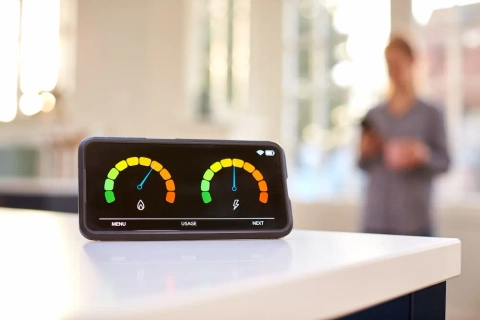
The Chancellor announced that 75% of the costs for the Renewables Obligation (RO), will be taken off household energy bills for three years starting April 2026.
The Budget also confirmed that the Energy Company Obligation (ECO) would not be extended past March 2026.
Ministers say this will cut average household bills by £154 a year, equivalent to £134 off the price cap. Cornwall Insight analysis suggests the real impact is closer to £145 off the price cap once allowances are factored in.
Craig Lowrey, Principal Consultant at Cornwall Insight outlined what this might mean for customers and the energy market:
“Lower bills are always welcome, but we need to be realistic about what these measures achieve. Shifting some levies around does not remove the costs of running and decarbonising our energy system, it simply changes how they’re paid for.
“The long-term solution is a low carbon system that delivers stability and protects us from the volatility of fossil fuel prices. That takes serious upfront investment and an honest conversation about how we share those costs fairly.” Read the full response here.
Warm Homes and Business Relief
An extra £1.5bn goes into the Warm Homes Plan, while energy-intensive businesses will see deeper discounts through schemes like the British Industry Supercharger. These steps aim to keep UK firms competitive and help households struggling with high costs.
Electric Vehicles Face Mileage Charge
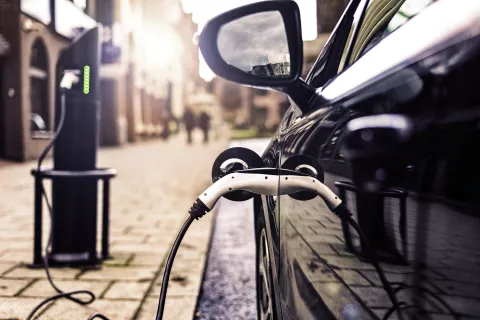
From April 2028 EVs and plug-in hybrids will face a mileage charge. The eVED will see BEV drivers pay £0.03 per mile and PHEV drivers pay £0.015 per mile, the government expects that a typical BEV driver will pay around £240 per year.
To continue promoting the adoption of EVs, the Government announced that it is boosting the Electric Car Grant with an additional £1.3bn of funding and extending it to 2029-30. It is also delaying changes to benefit-in-kind rules for Employee Car Ownership Schemes until April 2030.
The Government will also allocate £100mn to local authorities and public bodies to accelerate installation of chargepoints. It will also introduce a 10-year 100% business rates relief for EV chargepoints and EV-only forecourts.
Oil and Gas: New Price Mechanism
The Energy Profits Levy ends by 2030, replaced by the Oil and Gas Price Mechanism (OGPM). This revenue-based system applies an extra 35% tax only during price spikes, triggered when oil exceeds USD$90 a barrel or gas hits 90p per therm.
The North Sea Future Plan confirms no new exploration licences but pledges support for existing fields and jobs.
Nuclear Regulation and Investment
The Prime Minister has issued a Strategic Steer for the nuclear sector, promising faster, proportionate regulation and collaboration. Nuclear will now qualify for green financing, opening the door to investment through green gilts and savings bonds.
Energy Infrastructure and Decarbonisation
New powers in the Planning and Infrastructure Bill will be applied to create a mechanism to reallocate released capacity and reserve future capacity for important demand projects.
Annual government R&D investment will rise to £22.6bn by 2030, with clean energy industries among the priority sectors.
Apply for Free Trial of Industry Essentials