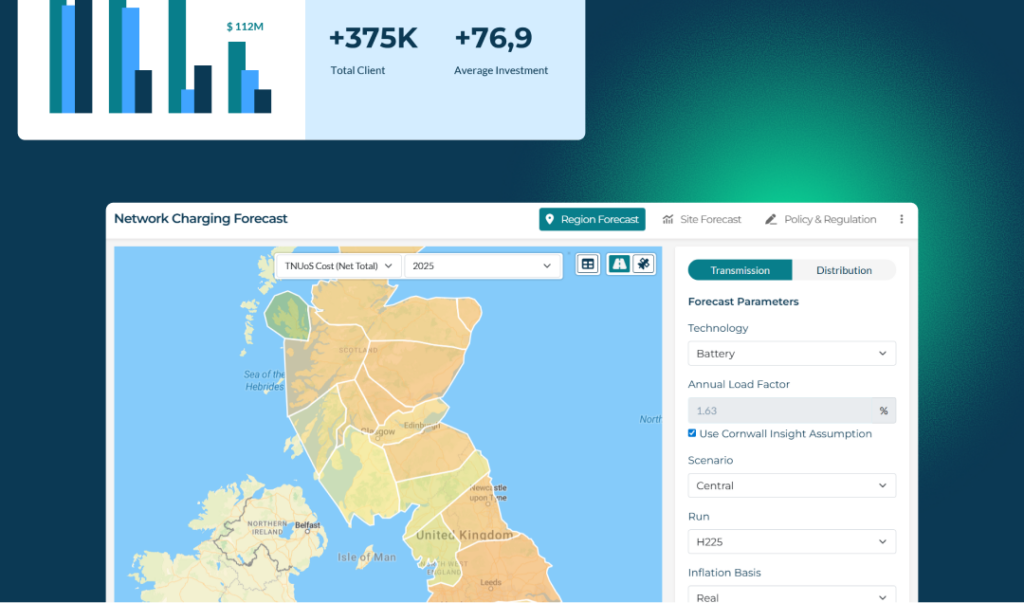

Some of Britain’s biggest energy users could see their annual bills rise by an average of £450,000 by 2030, as non-commodity costs – or third-party charges (TPCs) – continue to climb.
New analysis from Cornwall Insight’s Business Energy Costs Forecast, reveals that these charges, which sit on top of wholesale energy prices and fund the GB’s power grid and Government support schemes, are set to rise sharply for those many energy-intensive1 businesses not covered by Government relief schemes. Retail chains, water companies, and transport operators are among those affected, with the projected increases – around 5% of current bills – putting pressure on margins and potentially pushing up prices for consumers.
There are a number of factors causing the increase in TPCs including:
- Transmission network investment: With renewable energy increasingly coming from more remote locations in GB, substantial investment is required to construct new transmission lines and strengthen the grid to transport and deliver electricity to homes and businesses. This will add around £100,000 to bills on average across the country from April 2026, climbing to almost £250,000 by 2030.
- Nuclear investment: From 2026, £200,000 of the increase will come from the new
Nuclear Regulated Asset Base (RAB) model, designed to finance new nuclear power
stations.
Other factors including the funding of the bill discount scheme for consumers living near electricity transmission infrastructure and the funding for hydrogen production will also influence rising costs, with the exact treatment of these in bills yet to be confirmed.
Based upon previous statements released by Ofgem as part of its view on the new regulated price controls, these higher transmission charges were not totally unexpected, but highlight potential further financial pressures that businesses will face.
Crucially, the anticipated increase will predominantly be delivered through higher standing charges – which have been a point of increasing political and regulatory contention in recent years – and which businesses will be unable to avoid through more flexible consumption. While Ofgem has stated that it expects the transmission charge increases to be mitigated by the benefits of an expanded electricity transmission network, these may take time to emerge and will be felt by billpayers. Likewise, the Government has stated that investment in new nuclear capacity will ultimately yield benefits in terms of lower prices and improved energy security.
Some energy-intensive industries get help through the Government’s Network Charging Compensation (NCC) scheme – with discounts potentially rising from the current 60% to 90%. Smaller eligible businesses, such as automotive manufacturers, could also see exemptions cut their costs by up to 25% from 2027. But many other high energy users – including water utilities, transport operators, and retail chains – will not qualify for these exemptions.
Dr Craig Lowrey, Principal Consultant at Cornwall Insight:
“Every step we take towards a cleaner, more resilient energy system has a cost, and the reality is that money has to come from somewhere. Investment in new transmission lines, nuclear power, and backup capacity are not optional extras – they are the backbone of the UK’s future energy security. Without them, we risk higher volatility, and even greater long-term costs.
“But the way those costs fall matters. Right now, there is a real risk of a system where some businesses are protected while others shoulder the full weight of rising charges. For many businesses, these charges are not just numbers on a bill – they can mean difficult decisions about jobs, investment, and prices for customers. The challenge now is to make sure the transition is funded fairly, so that while we build the low carbon system we all need, we don’t leave households and businesses feeling like they’re carrying an impossible burden.”
Reference:
1. Large energy using businesses have an average annual electricity demand of 52,560MWh
Energy Demand Forecasts
Business Energy Cost Forecasts that support the development of accurate, long-term budgets for electricity and gas costs.